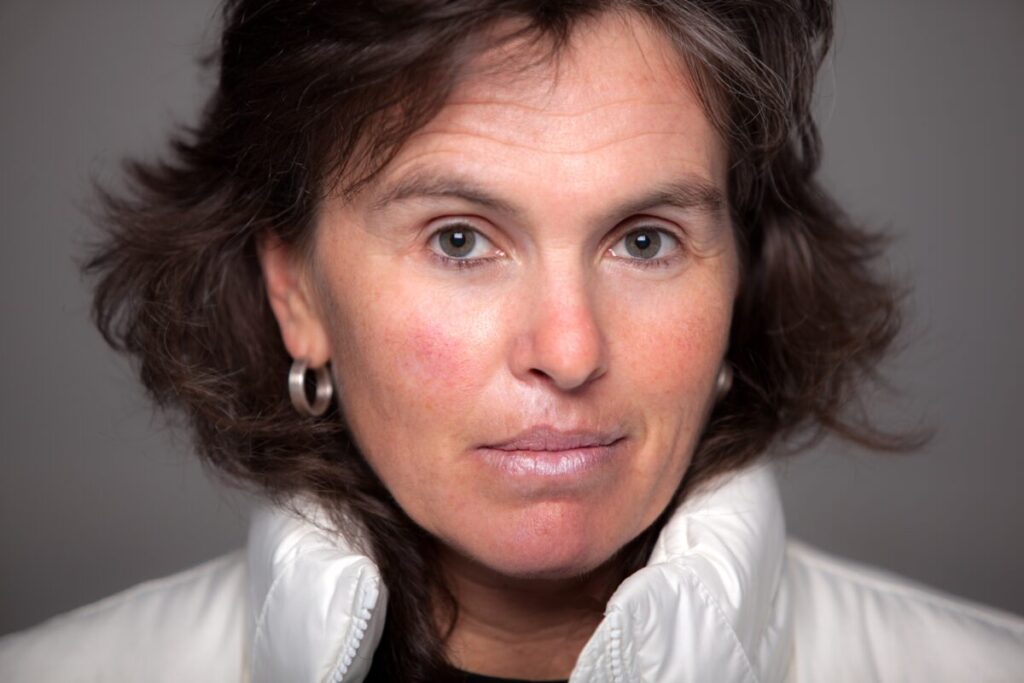







Acclaimed Vietnamese-Canadian author Kim Thúy lived many lives as a translator, restaurateur, and lawyer before embarking on the journey of a writer. She earned a bachelor’s degree in linguistics and translation from Université de Montréal in 1990, and her knowledge of different languages offers a unique perspective on life, and the stories she tells.
Having found roots in Montréal via Malaysia during the Vietnamese refugee crisis of the 1970s, Thúy has written a number of semiautobiographical works, including her debut 2010 novel Ru, a poetic tale told in vignette form, for which she received the Governor General’s Award for French-language fiction in 2010. Her most recent book, Em, explores the profoundness of love.
Thúy took some time out of her busy schedule to speak with Elixuer about her work as a writer, her most recent book, and the power of language.
As someone who is multilingual, how does that affect your writing as you use words and phrases from different languages in a single text?
I think one feeds the other. Yes, translation exists, but each language carries a culture. It’s not so much about the words, but the culture behind it that we can’t translate.
In Vietnamese, there’re many forms of the verb “to love.” You have the for the love for your parents, another for the love between spouses, another word for cakes, and friends, and a dog, for example. One word for passionate love. We don’t have that in French or English, so how can you translate that?
When I write the word aimer in French, I know the nuances — more than just the word aimer — so I would add the adverb amoureusement. Aimer amoureusement means “love passionately.” If I didn’t know the word in Vietnamese, I would not have seen the nuances in French to add that amoureusement.
What do you find about your writing that resonates most with readers and critics?
I think each person would read the book differently. For example, Ru here in Québec is read like a mirror, reflecting the Québecers who welcomed. In Italy, they thought that it was the voice of an immigrant that the reader wanted to hear. Romanians and Vietnamese share a Communist past, so that spoke to them. Then in Spain, surprisingly, it was women’s issues or heroism.
I think maybe because it’s so simple, like plain yogurt, to which you can add anything to make it taste good, but it’s actually what you add to it that makes it good! I think I’m just plain yogurt, and the reader would add their own experience.
Before you pursued writing, you were a restaurateur in Montréal, and you published a cookbook. Do you see any parallels between writing and cooking?
Cooking is about finding the balance between the ingredients, and writing is finding that balance between the words. I am a word lover. When you love words, you want all of them out there, right? You have to find the rhythm, the musicality of those words together, and the balance between them. We can love sugar, but if we put too much sugar, then we can feel sick.
The balance to find is delicate. I think a great meal is a meal that you can say that you are blessed that you get to eat such a great dish, and a book is the same thing.
Can you tell us about your most recent book, Em? What is the meaning behind the title?
In Vietnamese, we don’t have personal pronouns. Em means a younger brother or a younger sister, and it came to me because Ocean Vuong’s book of poetry — the first one — got published here in Québec. The publisher wrote to me and asked me to write the foreword. I told him that I don’t know how to write forewords.
It was two in the morning when he sent it to me. He said, “Well, whatever. Enjoy. Read it. You don’t have to do anything.” I read it. I cried the whole night. I didn’t go to bed. I wrote the foreword right away, and I started with “Em” because he’s much younger than me. I couldn’t bring myself to call him Ocean because we’re both Vietnamese, and I was sure that he has a Vietnamese name as well. Right away, I felt like I was the aunt or the big sister.
Em is so nice. You feel protected when you’re being called em. And aime in French is the imperative form for the verb “to love” — aimer.
Hermoine Euan | Contributing Writer