






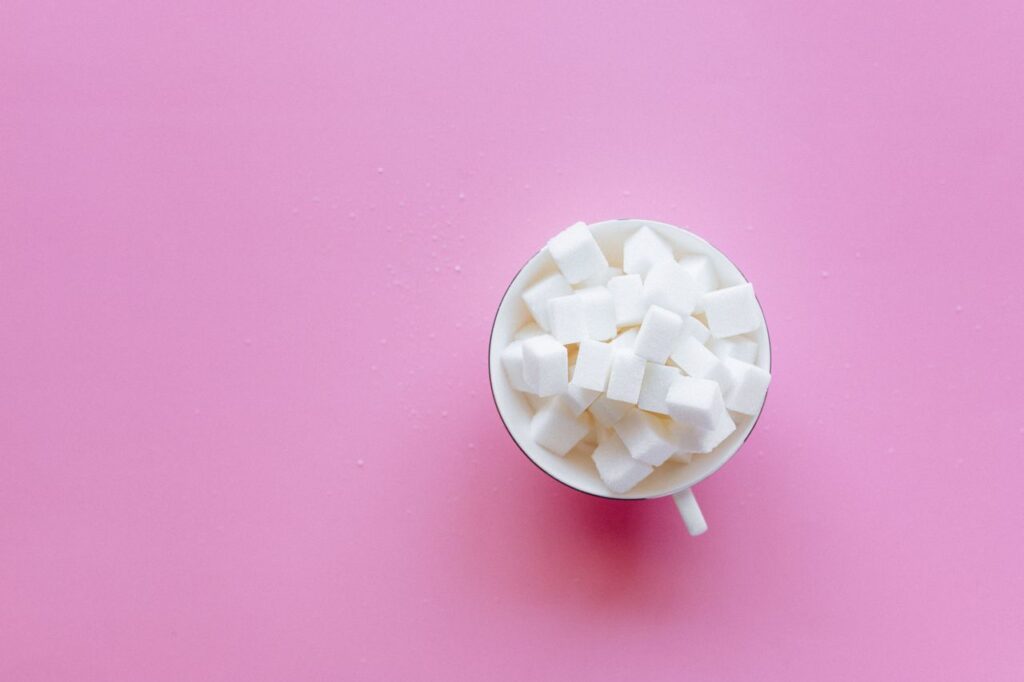
It is not always the obvious dessert. Often, it is yogurt labelled ‘healthy’; the salad dressing marketed as ‘light’; the afternoon latte; or the protein bar promising energy. Sugar hides in plain sight. For women, its impact runs deeper than weight gain. It influences hormones, mood, metabolism, and long-term health.
The Hormone Disruptor You’re Not Watching
Frequent blood sugar spikes trigger repeated insulin release. Over time, this may lead to insulin resistance, increased abdominal fat storage, energy crashes, intensified PMS symptoms, and worsened perimenopause discomfort. Blood sugar volatility affects emotional regulation and long-term metabolic stability.
The Many Names of Sugar
Sugar is rarely labelled as ‘sugar’. Watch for dextrose, maltose, cane juice, agave nectar, corn syrup, rice syrup, and fruit concentrate. Even savoury foods may contain added sweeteners.
The Emotional Cycle
Sugar triggers dopamine release, creating temporary comfort followed by fatigue, irritability, and cravings. This cycle can intensify during PMS, pregnancy, postpartum, and menopause.
Reclaiming Balance
Reducing hidden sugar requires awareness rather than restriction. Pair carbohydrates with protein or healthy fats, choose plain yogurt over flavoured versions, read ingredient labels carefully, and prioritize whole foods. When blood sugar is steady, women experience clearer thinking, a stable mood, improved energy, better sleep, and reduced inflammation. Sweetness is not the enemy. Unawareness is. And once women understand how sugar operates quietly beneath the surface, they can make choices that support rather than sabotage their health.
Sean Plummer | Contributing Writer


