



Angela Ysseldyk grew up in a beekeeping family where work and life were completely intertwined from an early age. Her childhood was shaped by early mornings, constant movement, and a household built around entrepreneurship, food production, and a close relationship with nature. Today, she is a nutritionist and co-owner of the family business her father started in 1981, carrying forward a legacy built on bees, sustainability, and a deep understanding of the food system. Below, she speaks about her upbringing, the evolution of the business, and why pollinators remain central to health and the environment.
You grew up in a beekeeping family, what do you remember most from those early days?
What stands out most is the work ethic and how naturally everything was part of daily life. My dad would often be up at 3 a.m. caring for the bees, moving hives, or delivering honey, and my mom was deeply involved as well, whether in production, logistics, or supporting the wellness side of the business. We lived it every day. We had a garden, made our own food like bread and granola, and even sold products from a small storefront outside our home. It was an integrated way of living that shaped how I understand responsibility, discipline, and nature.
You now co-own the business your father started. What has that journey been like for you?
It has been a second-generation responsibility that comes with deep respect for what was built before us. My parents started the business in 1981 and grew it over decades through consistency, resilience, and hard work. When we stepped in, we didn’t start over, we expanded on that foundation. My husband and I both brought outside experience in retail, entrepreneurship, and nutrition, which helped us grow the brand while staying grounded in its original values. It is about preserving what matters while continuing to evolve it. We have also had to navigate challenges like COVID and inflation, which have reinforced the importance of systems and adaptability.
As a nutritionist and the daughter of a beekeeper, how has growing up around bees influenced your perspective on health and wellness?
It gave me a very strong understanding that everything is connected. One in every three bites of food depends on pollinators, so health is directly tied to the environment. That idea, that when you look after the bees they look after us, has stayed with me. It shaped how I see nutrition in a much more holistic way, not just as food, but as part of a larger ecosystem. Being close to nature from such a young age also grounded my understanding of wellbeing beyond just physical health. Nature has a direct impact on mental, emotional, and environmental wellness, and it constantly reminds you how interconnected everything is. That is why so much of what we do today connects health with environmental responsibility through initiatives like Sugar Swap and Let’s Plant.
How do you use honey in your daily routine?
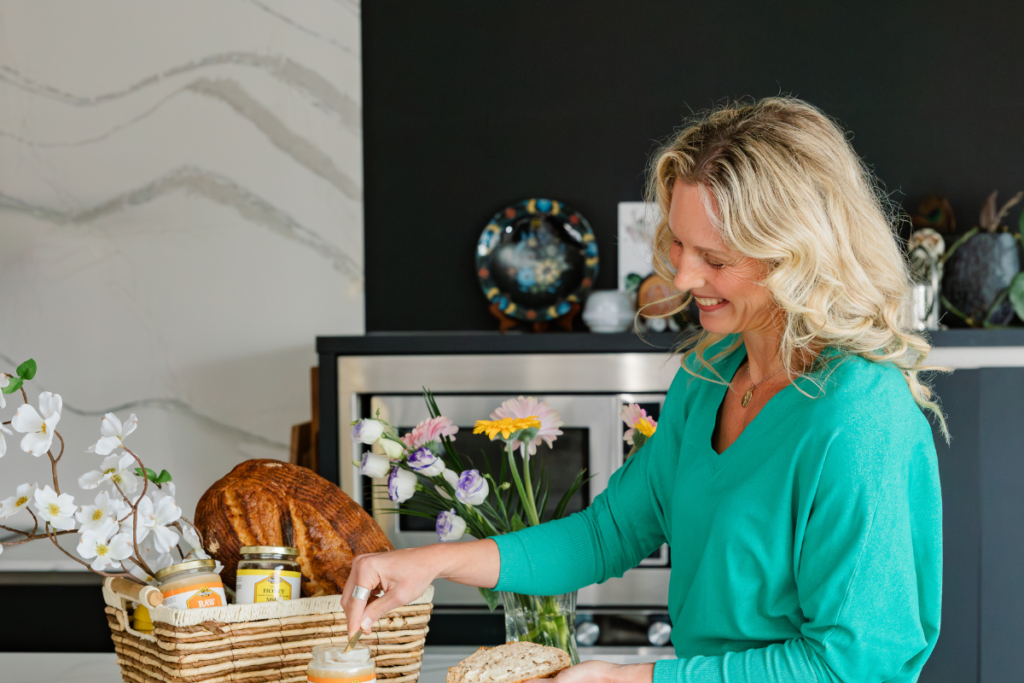
It is part of everyday life in many ways. I usually start my mornings with warm water and honey, sometimes with lemon. I use it in yogurt, baking, and cooking, and it often replaces refined sugar in meals. It also appears in savoury dishes more than people expect, like stir-fries, salmon bowls, or hot honey on pizza. We have developed products that make it easy to use in different ways. Beyond food, I sometimes use raw honey in skincare or when I am unwell. It is a simple but highly versatile ingredient.
What do you wish more people understood about where their food comes from?
I think there is often a disconnect between food and the systems behind it. So much depends on pollinators, but that connection is not always visible. There is also a transparency issue, especially with honey, which is one of the most adulterated foods globally. Imported honey can sometimes be mixed or altered in ways people are not aware of. Choosing local is not just about preference, it is about supporting farmers, beekeepers, and the integrity of the food system.
Can you explain why pollinators are so important to our food system?
They are essential to a large portion of the food we eat, including fruits, vegetables, nuts, seeds, and crops like canola oil. At the same time, pollinators are under real pressure from habitat loss, climate change, monocropping, and pesticide use. We are seeing significant declines in bee populations, with many species now at risk. Protecting pollinators is not just environmental, it is directly tied to food security and the future of how we eat.
What are some simple things people can do to help support pollinators?
It starts with awareness, simply noticing them when you are outside, especially in warmer months. Planting pollinator-friendly flowers, even in small spaces, can make a difference. Supporting local and organic food systems also helps. We launched our Let’s Plant campaign to encourage the planting of millions of pollinator-friendly seeds across Canada. Small actions really do add up when they are shared.
What does honey mean to you beyond just being a food?
It represents connection to nature, to history, and to people. Honey is created through an extraordinary natural process, where bees collectively visit millions of flowers and work together in a highly organized system. Beyond its nutritional value, it carries emotional meaning, from comfort to memory to tradition. For me, it is a reminder of how closely human life is tied to the natural world.
Laura Silva | Contributing Writer